
Mortgage words, in plain English
Short answers to the words you'll hear when you buy a home, from agreement in principle to completion. Pick a topic, or search for the word that's got you stuck.
Words you'll hear on the way
Showing all 32 words
-
Buying a home
Agreement in principle
A lender's note of how much they'd probably lend you, after a quick look at your income and credit file. It isn't a promise, but it shows estate agents you're a serious buyer.
-
Buying a home
Valuation
The lender has the home valued to check it's worth what you're paying. It's for the lender, so it tells you little about the condition of the home.
-
Buying a home
Underwriting
The lender's team checks your application, your documents and the valuation, then decides whether to lend. If they come back with questions, we deal with them together.
-
Buying a home
Mortgage offer
The lender's formal offer once underwriting is done. It sets out the loan, the rate and the terms, and it has an expiry date, so keep an eye on it.
-
Buying a home
Exchange of contracts
You and the seller swap signed contracts and you pay your deposit. From this point the purchase is legally binding, so your buildings insurance needs to start here.
-
Buying a home
Completion
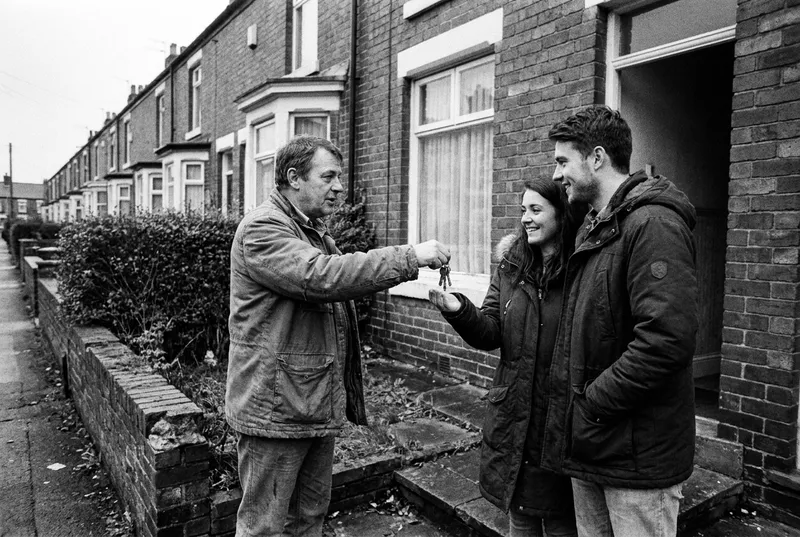
The day the rest of the money goes to the seller and the home becomes yours. For most people it's also the day you get the keys.
-
Buying a home
Searches
Checks your solicitor runs with the council and others, such as local authority and environmental searches, to find anything that could affect the home.
-
Buying a home
Title
The legal record of who owns the property and what rights come with it. Your solicitor checks it so there are no disputes or nasty surprises.
-
Buying a home
Leasehold
You own the home for a set number of years, but not the land it stands on. Your solicitor talks you through the lease, the service charges and the ground rent.
-
Buying a home
Staircasing
With shared ownership, buying more of your home bit by bit, often until you own all of it and stop paying rent on the rest.
Shared ownership -
Mortgage types
Fixed rate
Your interest rate stays the same for a set time, often 2, 3, 5 or 10 years, so your monthly payment doesn't change. After that it usually moves to the lender's standard variable rate.
-
Mortgage types
Tracker (variable rate)
Your rate follows a benchmark, usually the Bank of England base rate. When that rate goes up or down, your monthly payment moves with it.
-
Mortgage types
Standard variable rate (SVR)
The rate the lender moves you onto when a fixed or tracker deal ends. It's usually higher and the lender can change it, so it pays to look at a new deal before then.
-
Mortgage types
Discounted rate
A set discount off the lender's standard variable rate for the first few years. Your payment can still rise or fall when the SVR changes.
-
Mortgage types
Capped rate
Your rate can move, but it can't go above a set ceiling for a set time. You're protected if rates rise, though the deal may limit what you save if they fall.
-
Mortgage types
Repayment
Each monthly payment covers the interest and some of the loan itself, so the amount you owe goes down and by the end of the term the home is yours outright.
-
Mortgage types
Interest-only
You pay only the interest each month, so the loan stays the same size. You need a separate plan to pay back the whole amount at the end of the term.
-
Mortgage types
Offset
Your savings sit beside your mortgage and cut the interest you're charged. You keep the savings, and you can pay the mortgage off sooner or pay less each month.
-
Mortgage types
Flexible
Lets you overpay, underpay or take a payment break, within the lender's rules. Overpaying can shorten your mortgage and cut the interest you pay.
-
Mortgage types
Joint Borrower Sole Proprietor (JBSP)
A JBSP mortgage lets someone, usually a parent, join your mortgage without owning the property. Their income can help increase how much you can borrow. You own the home, but everyone on the mortgage is responsible for repaying it.
Help from family -
Mortgage types
Buy to let
A mortgage for a home you plan to rent out. Lenders have different rules for these and often look at the rent the home could bring in.
Buy to let -
Costs
Deposit
The part of the price you put in yourself, typically 5% to 20%. A bigger deposit can open up more deals, but some lenders offer up to 100% mortgages.
No deposit? -
Costs
Solicitor fees
What you pay a solicitor or conveyancer for the legal work: searches, title checks, contracts and sending the money on completion. Ask for a full quote before you start.
-
Costs
Homebuyer Report
Also called a RICS Level 2 survey. You pay for it, and it looks at the condition of the home and points out any big problems. It suits newer homes and ones in standard condition.
-
Costs
Building Survey
Also called a RICS Level 3 survey. It's the most detailed survey, once known as a full structural survey, and worth having for an older home, one in poor condition, or if you plan big works.
-
Costs
Early repayment charge
A fee some lenders charge if you pay off the loan, or move it to another lender, during a fixed or discounted deal. Check it before you remortgage.
-
Costs
Our advice fee
There may be a fee for mortgage advice, payable when you make your full mortgage application. The exact amount depends upon your circumstances, but will range from £495 to £995, and this will be discussed and agreed with you at the earliest opportunity. The first call is free and doesn't commit you to anything.
Book a free call -
Protection
Buildings insurance
Covers the structure of your home against things like fire, flood, storms and subsidence. Lenders insist on it, and you need it in place from exchange of contracts.
Protecting your home -
Protection
Contents insurance
Covers your belongings against theft, damage or loss. It isn't compulsory, but it's well worth having once you move in.
-
Protection
Life insurance
Pays out if you die, so your family can clear the mortgage or cover other costs. It isn't compulsory, but it matters if anyone relies on your income.
Cover for your family -
Protection
Critical illness cover
Pays a lump sum if you're diagnosed with a serious illness named in the policy. It can keep up the mortgage if you can't work.
-
Protection
Income protection
Pays you a monthly income if illness or injury stops you working, to help with the mortgage and the bills.
Protection advice
No word matches that yet. Ask Andy and he'll explain it.






Still got a question?
Ask Andy. Book a free, no-obligation call, ring or send a WhatsApp, and he'll explain it in plain English.